Let's find your path
A few quick questions, that's all. You can go back a step anytime, and at the end you'll see your best-fit program next to the other options — so you can keep exploring before deciding anything.
Explore every program directly
Skip the matcher and look through the full lineup whenever you like.
Easy to switch once you're here
All of our undergraduate pathways share the same first term, so students who arrive without transfer credits can move between them after starting — plenty of room to explore before you commit.
Already have college or university credits?
Bachelor of Science in Forestry
You're drawn to
Designing management plans for real forests — reading the land, working out the numbers, and balancing the needs of people, nature and industry.
Signature strengths
Where it leads
- Licensed professional forester
- Forest management & planning
- Forest operations
- Fire management & control
- Urban forestry
- Parks & conservation
Why students choose it
Bachelor of Science in Environmental Management
The three majors — tap to explore
Shared foundation
Every student builds the same science foundation — ecology, soils, mapping, data and hands-on field work — then specializes through their chosen major.
Where it leads
- Environmental assessment & policy
- Watershed, water-quality & fisheries work
- Wildlife biology & species-at-risk work
- Consulting, government & non-profits
There are three ways to do a master's here, depending on how you like to learn:
Learn through advanced classes
Build your expertise through graduate-level courses rather than a big research project. You can apply on your own — no supervisor needed first.
Learn by doing a research report
Do real research, written up as a focused report. Mostly self-funded, with some help from the faculty. You'll usually need a supervisor before applying.
Learn through original research
Carry out original research and write a thesisThesis: a substantial piece of original research you carry out and write up yourself — the centrepiece of a research master's or PhD.. Usually a funded position; you'll need a supervisor before applying.
Need a supervisor for the report or thesis routes?
The research-report and thesis programs ask you to line up a supervisor before you apply — the coursework MEM and the professional streams don't. Browse our faculty directory to see who's researching what, or email foremprograms@unb.ca and we'll help you connect.
Master of Environmental Management
The shape of it
You learn mainly through advanced classes rather than a big research project. About 16 months, with a paid summer work placement.
Good to know
Master of Forestry / Forest Engineering
The shape of it
You do genuine research, written up as a focused report — a little smaller in scope than a full thesis. Two specialized streams below (Professional Forester and Digital Forestry) have their own routes in.
Good to know
Master of Science (thesis)
Choose your subject
MScF — Forestry MScFE — Forest Engineering MScEM — Environmental Management
The shape of it
Carry out original research and write a thesis — the classic route toward a PhD.
Good to know
Master of Forestry — Professional Forester stream
A route to becoming a Registered Professional Forester (a licensed forestry professional) for people who have a science degree but no forestry background yet.
How it works
A structured set of classes matched to what the forester's licence requires across Canada, plus a supervised, real-world forest management report on an approved piece of land.
What makes it different
- Built for science grads new to forestry
- Matches the national licence requirements
- No supervisor needed to apply
- Mostly self-funded, ~$4–5K funding help
Master of Forestry — Digital Forestry stream
The technology edge of forest management — GIS, remote sensing and data analytics applied to real forestry problems, for people from forestry, computer science and geomatics alike.
How it works
Graduate-level classes in geospatial and digital tools, capped by an integrated management practicum where you tackle a live forestry challenge with an external partner.
What makes it different
- Brings together mixed backgrounds on one team
- Hands-on, partner-based practicum
- Focused on data, decision support & planning
- Admission assessed case by case — talk to us
Where you'll live & learn
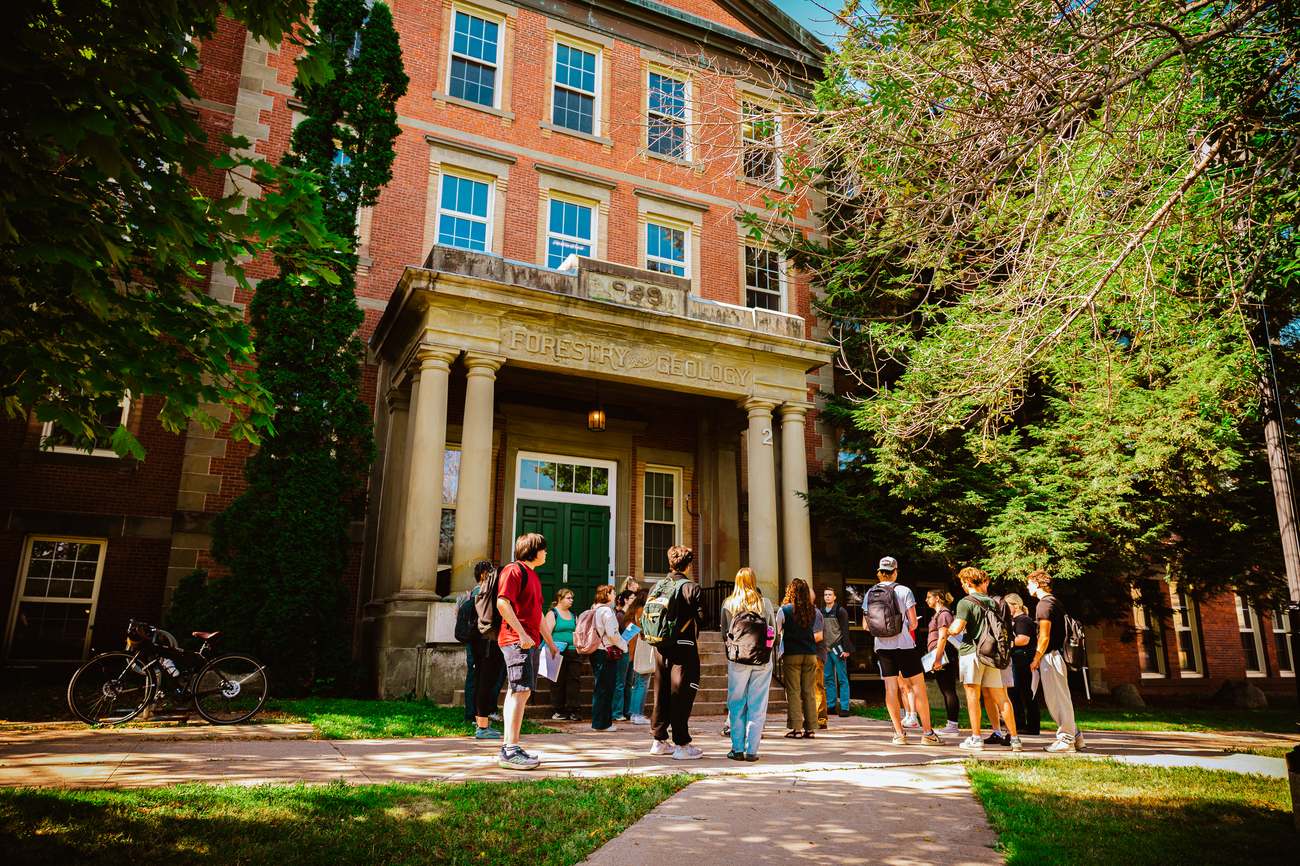
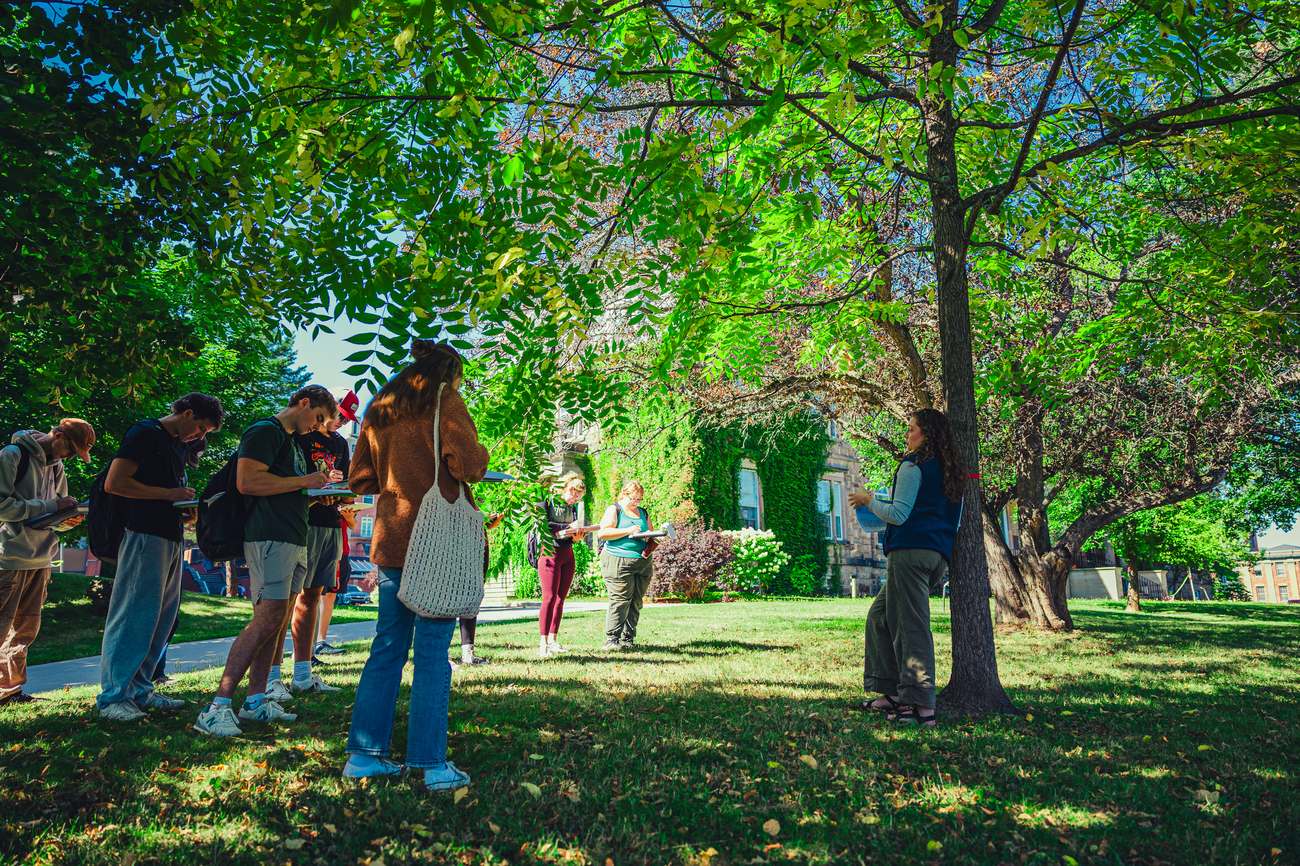
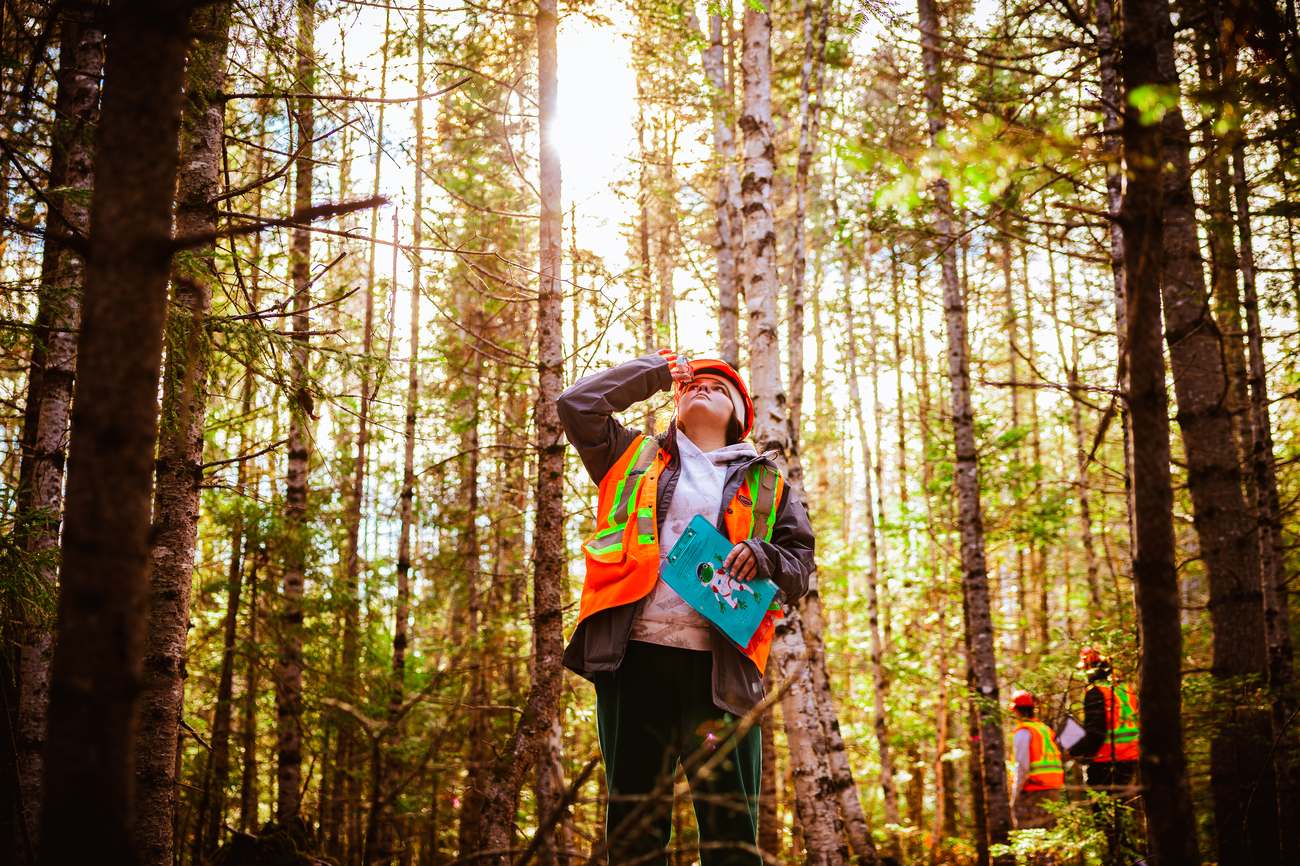
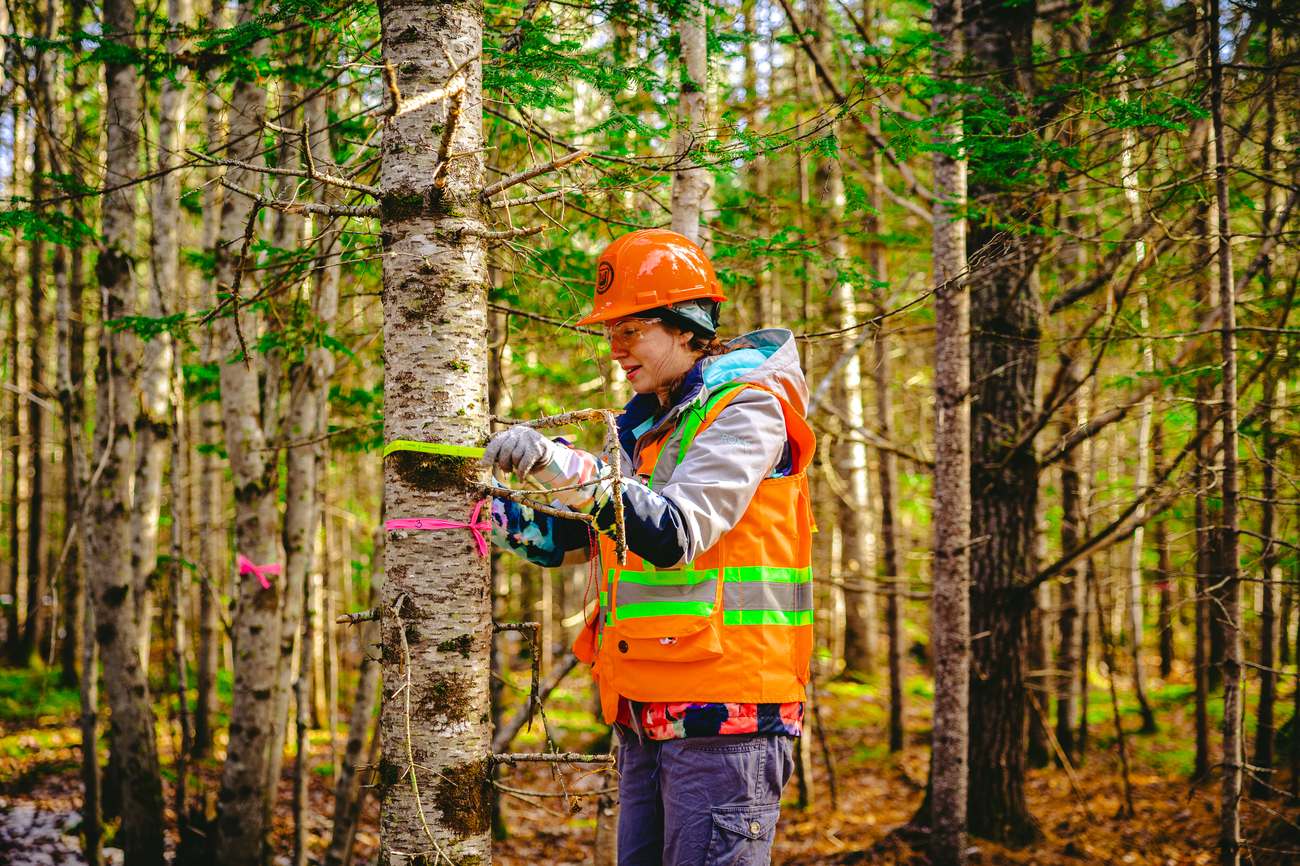
UNB's campus sits in Fredericton, New Brunswick — a city of roughly 75,000 that grows by about 8,000 when classes are in session. We're up on the hill, overlooking the beautiful Saint John River (Wolastoq) valley, and with about ~3,000 hectares of UNB-owned forest lands within 15 minutes of campus, we pride ourselves on learning both in the classroom and in the field. Beyond class, students get hands-on through groups like the UNB Woodsmen team — and many other teams and associations.

Still weighing your options? That's completely normal.
This matcher points you somewhere, but the best choice comes down to which problems you most want to spend your days on. Have a look around, and reach out any time you'd like to talk it through with a real person — we're happy to help.